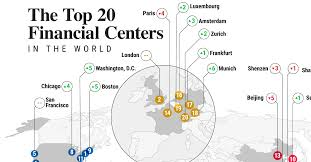
International Financial Centres (IFCs) have long served as the backbone of global finance. Cities such as New York City, London, Singapore, and Hong Kong have historically dominated global financial flows by providing deep capital markets, strong legal systems, and advanced financial infrastructure. However, rapid digital transformation and increasing regulatory scrutiny are reshaping the future of these financial hubs.
As technologies like blockchain, artificial intelligence, and digital currencies become mainstream, International Financial Centres must adapt to remain competitive in a fast-evolving financial ecosystem.
What Are International Financial Centres?
International Financial Centres are cities or regions where financial institutions, banks, investment firms, and capital markets operate on a global scale. These centres facilitate cross-border investments, foreign exchange trading, wealth management, and corporate financing.
Traditionally, IFCs thrive due to several factors:
- Stable political and economic systems
- Transparent regulatory frameworks
- Advanced financial infrastructure
- Access to global talent and capital
- Strong legal protections for investors
However, the digital age is transforming these traditional advantages.
Digital Transformation of Global Finance
Digital technology is dramatically changing how financial services operate. Innovations such as blockchain-based transactions, digital banking, fintech startups, and AI-driven financial analysis are reducing reliance on physical financial hubs.
For example, digital payment platforms, decentralized finance (DeFi), and fintech ecosystems allow businesses and investors to operate globally without being physically located in traditional financial centres.
Major financial hubs are investing heavily in technology innovation to stay competitive. Singapore has built a thriving fintech ecosystem supported by government initiatives, while London remains a leading fintech capital in Europe.
Key digital trends influencing IFCs include:
- Blockchain and distributed ledger technology
- Artificial intelligence in risk analysis and trading
- Digital banking and fintech platforms
- Cloud-based financial infrastructure
- Central bank digital currencies (CBDCs)
These technologies are making financial systems faster, more transparent, and more accessible.
The Rising Importance of Regulation
In recent years, financial regulations have intensified due to global concerns about financial stability, money laundering, tax transparency, and systemic risks.
Organizations such as the Financial Action Task Force and the International Monetary Fund are pushing for stronger compliance standards and improved oversight of financial systems worldwide.
As a result, International Financial Centres must balance two key objectives:
- Maintaining strict regulatory compliance
- Remaining attractive to global investors and businesses
Regulatory frameworks now focus on:
- Anti-money laundering (AML) compliance
- Transparency and tax reporting
- Data protection and cybersecurity
- Responsible fintech innovation
IFCs that effectively integrate regulation with innovation are likely to gain a competitive advantage.
Competition from Emerging Financial Hubs
While traditional centres still dominate global finance, emerging financial hubs are rapidly gaining influence. Cities such as Dubai, Shanghai, and Mumbai are investing heavily in financial infrastructure and regulatory modernization.
These emerging hubs benefit from:
- Growing domestic economies
- Expanding regional trade networks
- Government support for financial innovation
- Rapid adoption of digital financial technologies
As financial activity becomes more decentralized, the global financial landscape may shift from a few dominant centres to a more distributed network of financial hubs.
The Role of Fintech and Digital Assets
Fintech companies are playing a crucial role in redefining financial services. Digital asset markets, cryptocurrency exchanges, and blockchain-based financial platforms are challenging traditional banking systems.
Regulatory authorities are working to develop frameworks that support innovation while protecting financial stability. Many IFCs are launching regulatory sandboxes to test new financial technologies safely.
Cities that successfully integrate fintech innovation into their financial ecosystems will likely lead the next generation of global finance.
Sustainability and Green Finance
Another major trend shaping IFCs is the rise of sustainable finance. Governments, corporations, and investors are increasingly focusing on environmental, social, and governance (ESG) considerations.
Financial centres are positioning themselves as leaders in green finance by supporting:
- Sustainable investment funds
- Climate finance initiatives
- Green bonds and environmental projects
This shift reflects growing demand from global investors seeking responsible investment opportunities.
Challenges Facing International Financial Centres
Despite their strengths, IFCs face several challenges in the digital era:
- Rapid technological disruption
- Increasing regulatory complexity
- Cybersecurity threats
- Competition from decentralized finance platforms
- Global economic uncertainty
Financial centres must continuously innovate and adapt to remain relevant.
The Future of Global Financial Hubs
The future of International Financial Centres will likely be defined by their ability to integrate technology, regulation, and global connectivity. Rather than disappearing, IFCs are evolving into digitally advanced financial ecosystems.
Key characteristics of successful future financial centres will include:
- Strong digital infrastructure
- Adaptive regulatory frameworks
- Thriving fintech ecosystems
- Global connectivity and talent access
- Leadership in sustainable finance
Cities that embrace innovation while maintaining regulatory trust will continue to dominate global finance in the decades ahead.
Conclusion
International Financial Centres are entering a transformative period shaped by digital technology and stricter global regulations. While traditional financial hubs such as New York City and London remain influential, emerging centres and fintech innovations are reshaping the financial landscape.
The future of IFCs will depend on their ability to adapt to digital disruption, maintain regulatory credibility, and foster innovation-driven financial ecosystems. Those that succeed will remain vital gateways for global capital and economic growth in the digital era.
If you’d like, I can also:
- Turn this into a 3000+ word SEO blog post
- Add SEO keywords, meta description, and headings (H1–H4)
- Optimize it for Google ranking and featured snippets.